Resilience Grows Here: What Students Learn in Classrooms That Care

Blog Post Uncategorized

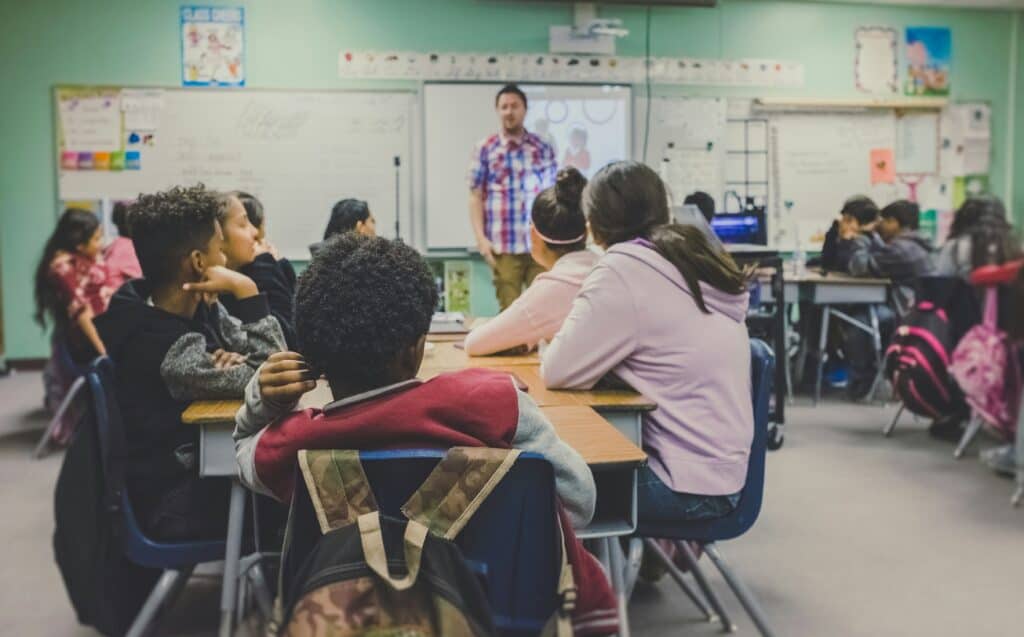
Some of the conversation about student resilience assumes it is something students either possess or lack. I have observed students being encouraged to “toughen up,” push through, or be more resilient.  In some cases, little attention is given to the conditions that actually make resilience possible.

Yet research and classroom practice tell a different story. Resilience develops through repeated experiences of support, manageable challenge, and reflection. It is cultivated, not commanded. Classrooms, when designed intentionally, can serve as powerful spaces where students learn how to regulate stress, take academic and emotional risks, recover from setbacks, and keep going.

As a classroom teacher, I was once reminded by a veteran educator, “We teach people, not English.” That statement has never left me. It reshaped how I understood my role—not as someone delivering content, but as someone responsible for both the learning and the well‑being of the students in front of me.

This perspective pushed me to ask daily, What kind of environment am I cultivating for students? As I support teachers in my work now, I coach and assist them in intentionally creating classrooms where regulation, connection, challenge, and recovery are practiced every day. In such classrooms, care is not an add‑on; it is the foundation that makes learning possible.

Below, I share concrete teacher practices that help build this foundation of resilience in the classroom.

Teaching Students to Regulate Their Nervous Systems

Helping students build resilience begins with helping them notice and regulate their internal states. Simple, low-key mindfulness practices—such as pausing for a few slow breaths or grounding attention in the present moment—can support students’ focus and self-regulation without requiring specialized programs or spiritual language (Avila & Maida, 2025).

For example, a voluntary beginning-of-class practice, like the five-breath reset can be used in classrooms. Research on attention supports this approach. Studies summarized by Terada and Merrill (2025) suggest that short, informal breaks every 10–15 minutes significantly improve student focus and performance. These pauses normalize mental fatigue and teach students that staying engaged does not mean pushing endlessly, it means knowing when and how to reset.

Building Resilience Through Relationships and Belonging

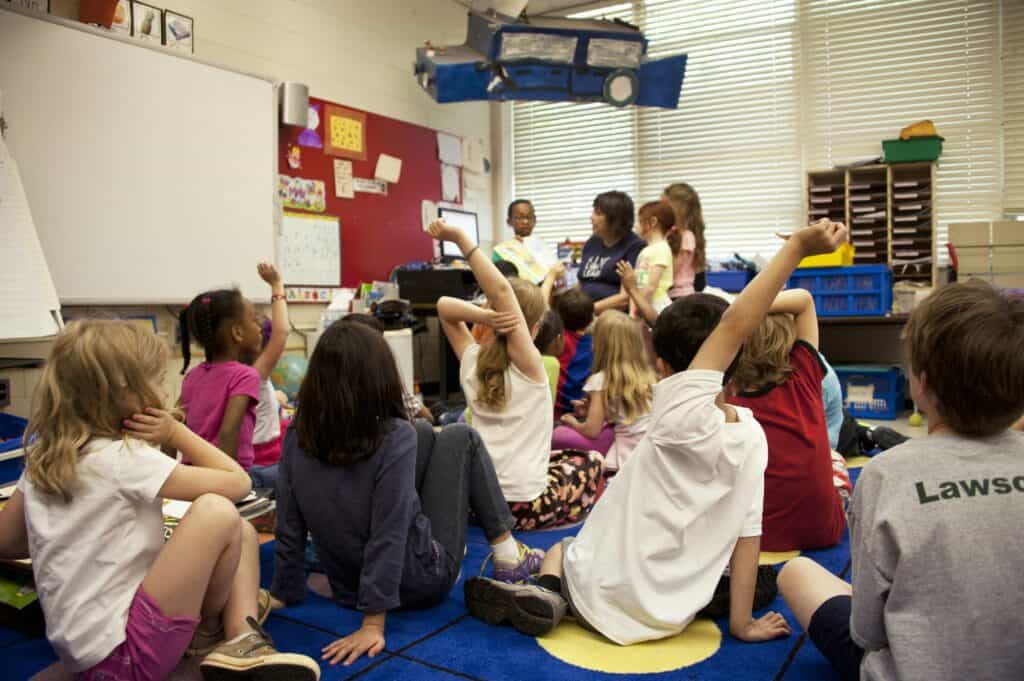
Resilience also grows in relationships. Studies highlighted by Terada and Merrill (2025) confirm that the combination of high expectations and trusting teacher–student relationships is a powerful driver of both academic and behavioral success. When students feel known and valued, they are more willing to take risks, persist through difficulty, and recover from mistakes.

Students who feel a sense of belonging within a school community are more successful academically and emotionally. Belonging creates the psychological safety students need to stretch themselves and remain engaged when learning feels hard.

Teaching Students How to Talk to Themselves

Another critical component of resilience is how students interpret their experiences. Helping students build healthy self-talk—especially in moments of challenge—can shape how they respond to stress and failure. Therapists interviewed by Haupt (2025) emphasize messages such as “Just because you have a thought doesn’t make it true” and “Asking for help is a kind of bravery.”

One classroom practice to support this is normalizing mistakes, emphasizing effort over performance, and explicitly model help-seeking. When teachers cultivate this type of classroom students begin to internalize more flexible and compassionate narratives about themselves, and these narratives can support resilience over time 

Designing Low-Pressure Opportunities to Practice Courage

For students with social anxiety, resilience develops when teachers provide structured, predictable opportunities to speak and participate. Beachboard (2025) shows how scaffolding discussions—through sentence starters, role assignments, and gradual participation—reduces fear of judgment while building confidence.

Resilience as a Classroom Practice

In an era of increasing academic, social, and digital pressures (O’Donnell, 2025), resilience is not an optional add-on for students—it is a developmental necessity. Teachers have the power to help build resilience by designing classrooms where students regularly practice regulation, connection, challenge, and recovery.  This is what it means to teach people, not just subject matter.  Long after they forget specific assignments they will remember a more powerful lesson: you can feel discomfort, receive support, and still move forward.

 References 

Avila, M., & Maida, D. (2025). Mindfulness Mondays and beyondASCA School Counselor, 63(2), 34–37.

Beachboard, C. (2025, March 14). 5 research-backed strategies to reduce students’ social anxietyEdutopia.

Garcia, A. G. (2025). What I learned as a student with anxietyCommuniqué, 54(3), 6.

Haupt, A. (2025, November 10). 5 things therapists wish every kid knewTime.

Jordan, A., & Lovett, B. (2025, October 14). Schools are accommodating student anxiety—and making it worseThe Boston Globe.

O’Donnell, E. (2025). Teen grind cultureHarvard Magazine, 127(4), 8–10.

Terada, Y., & Merrill, S. (2025). This year’s most important educational research findingsEdutopia.

Teaching as Hard Work, Teaching as Heart Work: Why Resilience Must Be Part of the Job

Blog Post Uncategorized

Dr. Shasha Lowe-Anderson

I entered the teaching profession in my early twenties with a commitment to improving educational outcomes for students in my community and spent more than twenty years serving in schools identified as low‑income. As a novice teacher, I was overwhelmed not only by gaps in my preparation, but by the unexpected emotional labor, the daily realities of the classroom, and the hundreds of exhausting decisions required of me each day. My personal experience is why Dr. Jill Biden’s reminder that “teaching is hard work—and heart work” resonates so deeply, and why I believe conversations about teacher burnout must begin with an honest discussion of the emotional demands of the job and the resilience it requires.

According to an analysis by Education Resource Strategies (ERStrategies), teacher turnover has increased across all experience levels, with early‑career educators leaving at the highest rates. Although teacher turnover is frequently attributed to factors such as compensation, leadership, and evaluation policies, research increasingly points to burnout as one of the primary forces pushing educators out of schools. If burnout is deeply tied to the emotional labor of teaching, the question is not whether teachers are “resilient enough,” but what structures, practices, and mindsets help cultivate resilience so educators can remain in the profession without sacrificing their well‑being.

What Resilience Looks Like in Real Classrooms

Name the emotional labor and respond before it spirals.

Jennifer Gonzalez’s (2018) reflection in Cult of Pedagogy offers concrete, classroom‑tested strategies for navigating emotional spikes. Rather than treating emotional moments as failure, she emphasizes awareness, cognitive reframing, curiosity, and intentional regulation as professional skills. Resilience here isn’t about suppressing emotion; it’s about pausing, interpreting situations differently, repairing when needed, and responding with care—for both students and teachers. Gonzalez offers some suggestions for teachers:

  • Notice early triggers (racing thoughts, rising frustration) and build brief pause points—slow breathing, a counted reset, or a moment of stillness—to de-escalate before reacting.
  • Separate identity from behavior. Replace “They don’t respect me” with “This strategy isn’t working”; move from judgment to problem‑solving.
  • Adopt an observer stance (What would a coach notice?) and lead with curiosity (What might this student need right now?), which lowers threat and restores agency.
  • Repair with boundaries. Name what happened, model accountability, and move forward.  This reduces lingering shame and strengthens relationships.

Asking for Help Is a Professional Skill

In Harvard Business Review, Manfred Kets de Vries (2023) reminds us that while self‑reliance is admired, it can backfire when we’re working beyond individual capacity. For teachers, fears of seeming incompetent, burdening colleagues, or losing control often keep us silent just when we need support most.  Manfred Kets de Vries suggests that we:

  • Reframe help‑seeking as competence and trust, not weakness.
  • Name the inner scripts (imposter syndrome, fear of rejection) that keep you isolated.
  • Make SMART, specific requests aligned to a colleague’s expertise (e.g., “Could you observe Tuesday’s discussion and give feedback on student talk moves?”).
  • Practice asking in small steps; let positive experiences reinforce the habit.

If teaching is heart work, resilience depends not only on how much heart teachers give, but on whether they have permission, and practice, to receive support in return.

School‑Level Moves That Make Resilience Possible 

Research by Kwok and Macfarlane (2025) underscores that resilience grows when schools provide intentional, day‑to‑day supports, not just generic encouragement.  Some examples include: 

  • Targeted professional development tied to real challenges (classroom management, discourse, lesson design, technology, curriculum, pedagogy).
  • Structured peer collaboration: common planning time, observation/feedback cycles, and access to external networks for “singletons.”
  • Active administrative support: clear goals, regular communication, appreciative and actionable feedback, backup with student behavior and family communication, and thoughtful coaching supervision.
  • Right‑sizing novice workload: adjust class size, preps, schedules, and paraprofessional support; build time to observe expert colleagues.

These aren’t luxuries; they’re conditions for learning the job.  They also make the hard work and heart work sustainable.

Sustaining the Heart Work

Teaching will always be hard work—cognitively demanding, logistically complex, and relentlessly relational. It is also heart work, asking us to care deeply, to repair when we miss the mark, and to keep believing in what students can do. Resilience, then, is not what teachers need after the work, it is what allows the work to continue. When we acknowledge this fully, resilience stops being a quiet expectation placed on individual teachers and becomes a shared responsibility—one that schools, leaders, and policies must actively support.

References

Doughty, M. (2024). Making sense of teacher turnover: A mixed-methods exploration of why teachers leave. Teachers College Record, 126(8), 32–62. 

Gonzalez, J. (2024, March 17). Some thoughts on teachers crying in the classroom. Cult of Pedagogy. 

Gonzalez, J., & Aguilar, E. (2018, May 6). 12 ways teachers can build their own resilience. Cult of Pedagogy.

Kets de Vries, M. F. R. (2023). Why it’s so hard to ask for help. Harvard Business Review, 101(4), 139–143. 

Kwok, A., & Macfarlane, K. O. (2025, February). Strengthening early-career teachers: Effective components of teacher induction programs (EdResearch for Action Brief No. 32). 

Mielke, C. (2022). Educator well-being 2.0. Educational Leadership, 79(9). 

Image provided by Unsplash