
Awarded CASEL’s highest designation for high-quality SEL programming.
The Collaborative for Academic, Social, and Emotional Learning (CASEL) has been reviewing evidence-based SEL programs since 2003.
The Resilience Builder Program program meets CASEL’s SELect criteria and is included in the CASEL Guide to Effective Social and Emotional Learning Programs.
This designation indicates that our program promotes students’ social and emotional competence in a SELect category, provides opportunities for practice, and offers multi-year programming; and delivers high-quality training and other implementation supports.
Student outcomes that fall into the SELect category are:
- Improved positive social behavior
- Reduced problem behavior
- Reduced emotional distress
- Improved student-reported identity/agency
- Improved school connectedness*
- Improved school climate*
* If the evaluation involved adolescents (i.e., students enrolled in middle or high school), then outcomes must be student-reported to qualify for SELect designation.
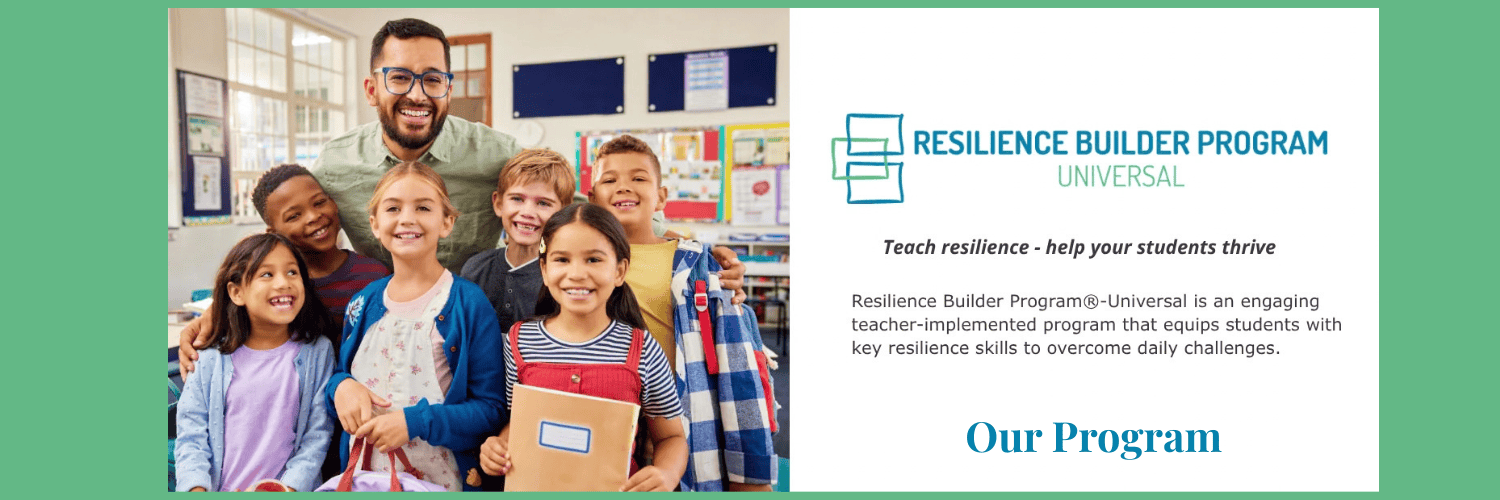
The RBP®-U is an evidence-based approach to social and emotional learning (SEL) that teaches the skills of resilience, and it was developed by mental health professionals, with input from teachers, counselors, administrators and afterschool coaches. It based on years of research and clinical application.
Program Format
- RBP is a teacher-implemented intervention to teach skills in the classroom to help children thrive and overcome daily challenges
- 12 total topics, consisting of 25 15-minute mini-lessons
- Each topic focuses on a different resilience-building skill
- Each of the 12 skills have been supported by decades of research and were hand-picked by teachers who helped pilot the program.
Program Materials
The following materials are all provided:
- Step-by-step teacher guides (including scripts)
- Brief, engaging instructional videos
Classroom activities
Handouts and worksheets - Family newsletters
All you will need is your classroom, and occasionally other small items (sticky notes, posterboard, chart paper, and/or a whiteboard).
What to Expect
All aspects of RBP®-U have been designed keeping your interests in mind.
- Minimal amount of prep-work required.
- Teaching resilience skills can help to increase your students’ classroom engagement overall, allowing you to do what you do best – teach!
Professional Development for School and After‑School Staff
Schools that join the Resilience Builder Program – Universal family gain access to a comprehensive suite of supports designed to strengthen implementation and enhance student and educator well‑being.
Program benefits include:
- Staff Training A one‑hour virtual session for teachers, counselors, and after‑school staff that introduces the program, reviews login and platform procedures, and provides time for questions.
- Implementation Coaching (optional) Ongoing, in‑depth support through individual and group coaching sessions to help schools integrate Resilience Builder practices effectively and sustainably.
- Data Collection Support Guidance and assistance with gathering and interpreting data that informs implementation and helps track progress.
- Professional Learning Network (optional) Opportunities to connect with a community of educators committed to resilience‑focused practices, program updates and data through a monthly newsletter.
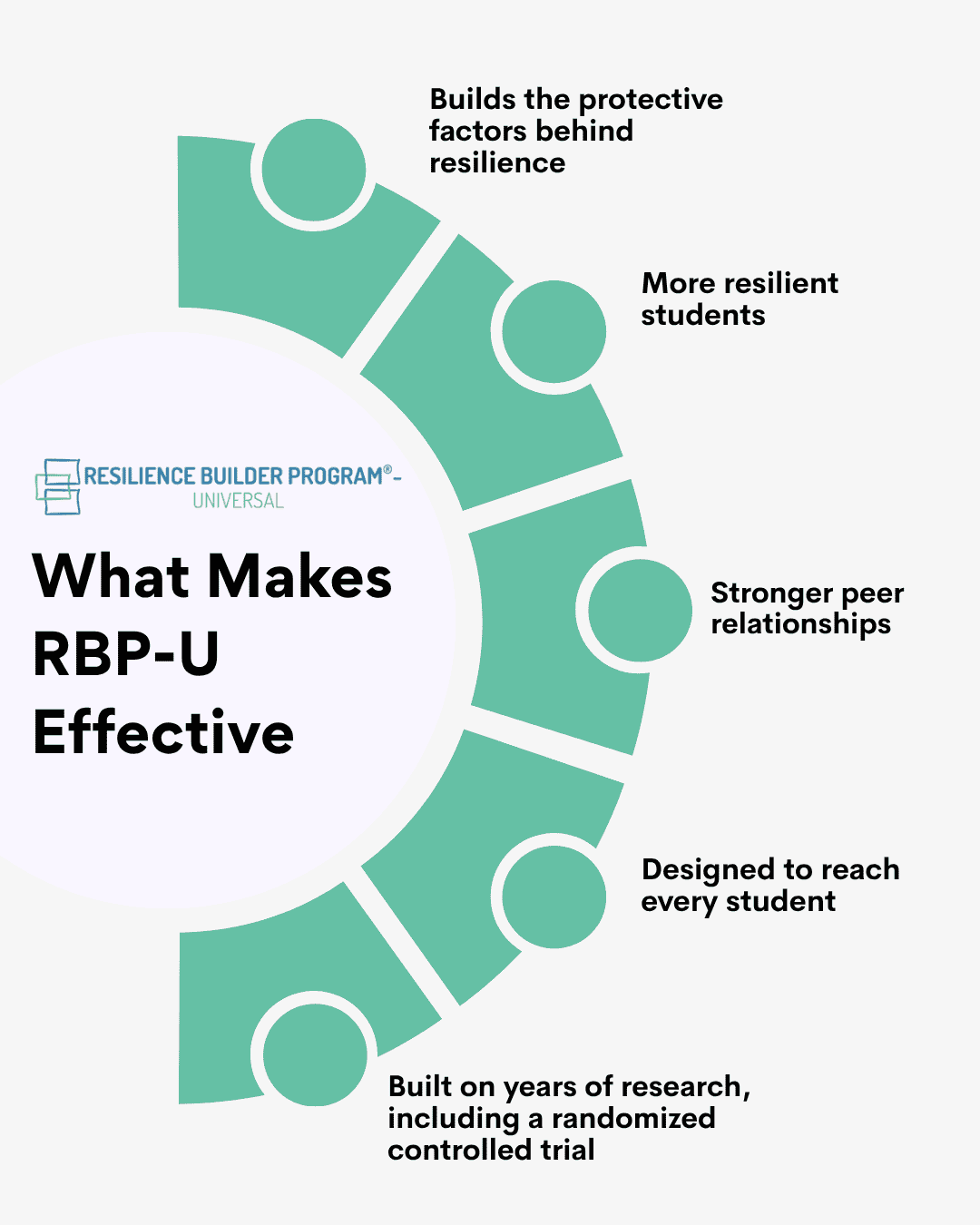
Our Research
RBP®-U is a school-based or after school intervention adapted from the original Resilience Builder Program® (RBP®).
- The RBP®-U is a manualized group therapy program focused on enhancing resilience skills using a cognitive behavioral framework.
- Groups for youth from kindergarten through high school have been conducted since 1992 at Alvord, Baker u0026amp; Associates, LLC, founded by Dr. Mary Alvord, which is a private psychotherapy practice in the Washington DC area.
Based on the success of the RBP® in the school setting as demonstrated by our research, we set out to adapt the program in such a way that would expand access to the intervention. As such, RBP-U™ was born.
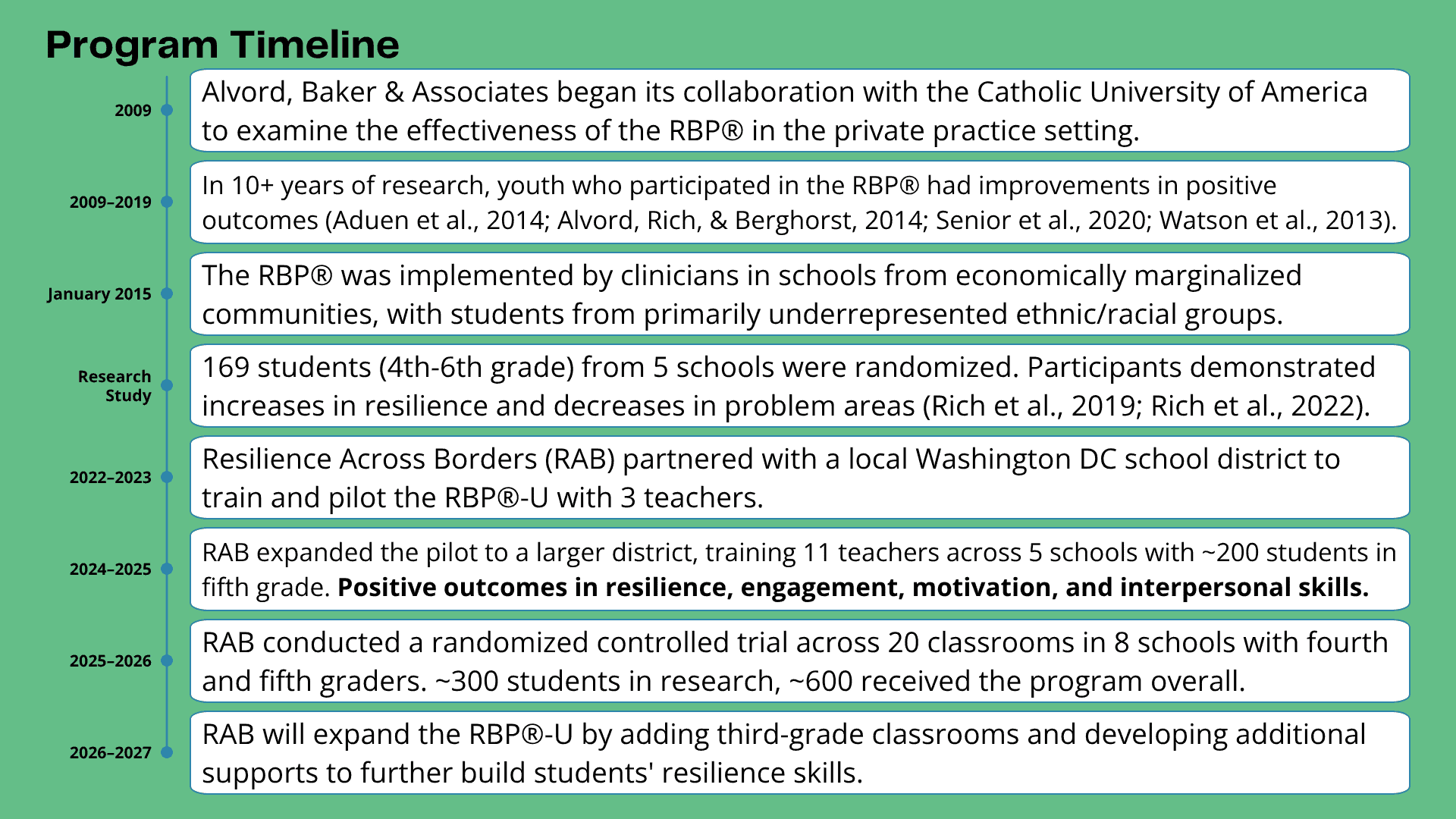
Resilience Across Borders, Inc. is a 501(c)(3) charitable non-profit dedicated to expanding access to mental health interventions and resources to all children and adolescents. Our current initiative is the development and dissemination of the Resilience Builder Program®-Universal for schools and afterschool programs, with a focus on economically marginalized communities.